
Delivery-ready means three things. You need flat, firm ground for the container to sit on. You need a straight, clear path for our truck to back in. And you need room overhead — about thirteen feet — for the trailer to clear. Get those three right, and our driver can usually set your container in under twenty minutes.
Get one of them wrong, and the trouble starts. A container sitting crooked on a slope. A door that won't swing shut once the ground shifts in January. A driver who has to turn the truck around and come back another day. We've delivered more than 5,000 containers around Durango and the Four Corners over the last 14 years. The deliveries that go wrong almost always trace back to the same few things — none of them complicated, once you know what to check.
Pick the Spot: Level, Firm Ground
A container needs flat ground. It has to hold roughly 5,000 pounds of steel without shifting. Settle unevenly, and the corner castings take the stress. Within a season you'll see doors that stick, seams that gap, or water pooling under one end instead of draining off.
Three setups work well on Durango lots: a packed gravel pad, a pair of railroad ties laid along the container's length, or — if your dirt is already firm and level — nothing more than a rake and a shovel. Plan the base to run the full length of the container. Leave a foot of clear room on each side.
Think about door swing too. Once we set your container, the doors need room to open all the way — plan on clearing at least the length of the doors, away from fences, sheds, or parked cars. Tell us which way you want the doors facing. Most people pick toward the driveway, for easy loading. We'll set the unit to match.
Slope matters more here than in flatter towns. A lot that looks level to the eye can still drop three or four inches over twenty feet. That's enough to throw a container's doors out of square. If your site has any grade at all, add extra gravel. We'd rather you use too much base material than have us set a unit crooked.
Drainage is the other half of the job. Point the low end of your pad away from the container, not toward it. Snowmelt in March finds every low spot on a property. A container sitting in a puddle all spring will rust faster than one that sheds water.
Clear the Path: Truck Access and Overhead Room
Our trucks deliver on tilt-bed trailers. The bed tilts back, the container slides off under its own weight, and the truck pulls forward once it's set. That means we need a path onto your property that's fairly straight, fairly firm, and clear of anything at windshield height or above.
Walk your driveway before delivery day. Look up. Low tree branches, a power line sagging near the road, a carport eave, a gate frame — any of these can stop a delivery cold. Our drivers won't risk clipping a line to save a trip. Not sure if your gate or driveway is wide enough? Call and describe it. We deliver into tight mountain driveways every week, and we can usually tell you over the phone if it'll work.
Tight turns show up a lot on older Durango properties, especially anything built before anyone planned for a delivery truck. A 40-foot container on a trailer doesn't turn like a pickup. If your access has a sharp bend, or a narrow gap between a fence and a shed, mention it when you schedule. We may want to look at the site first.
20ft vs. 40ft: How Much Room Each Actually Needs
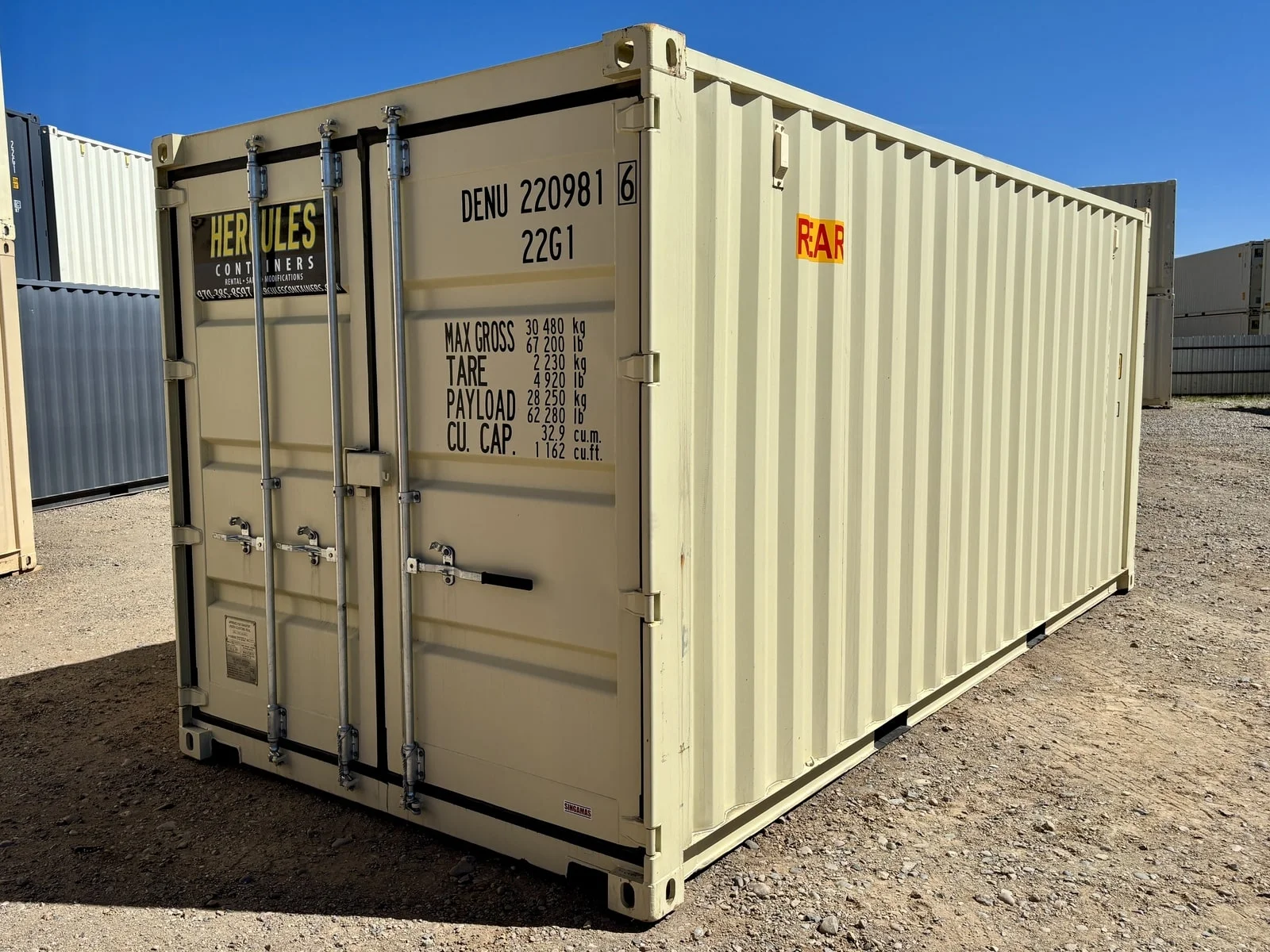
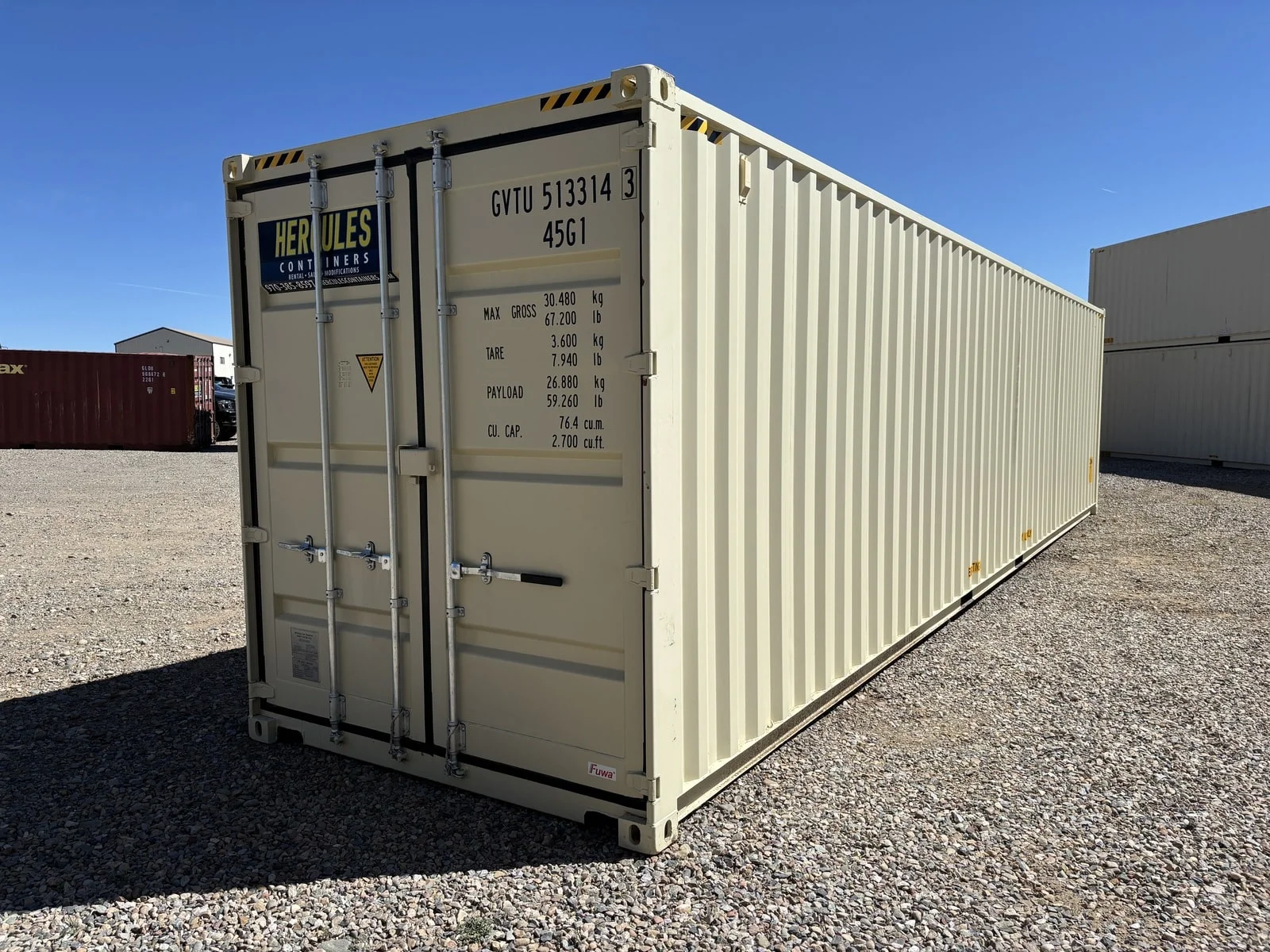
Twenty-footer or forty-footer, the math changes. For a 20-foot unit, figure on its own length of open ground, then some extra so our truck can swing wide and set it down clean. We tell customers: plan on double the footprint once the truck's in the picture. Forty-footers eat more room — twice the length, plus a wider arc to lay the trailer flat. Not sure which size fits your spot? Measure it and call us. We'll tell you straight if it works.
On a tight lot, the 20-foot option isn't just cheaper — it's often the only one that fits. We'd rather talk through your site size before delivery day than show up and find a 40-footer won't clear your side yard. Our containers page lists exact sizes for both, worth checking against your own measurements before you call.
Durango-Specific: Winter, Mud Season, and Slope
Timing matters here in ways it doesn't in flatter, drier towns. Frozen ground in January can actually work in your favor — it's firm, and it won't rut under the truck. The trouble spots are the shoulder seasons. Spring mud season, usually late March through May depending on the year, can turn a driveway that looked fine in February into something our truck can't cross without leaving ruts.
Snow load is the other factor. A container on an unlevel base pools snowmelt against one wall instead of shedding it. Freeze-thaw cycles work at any low spot in your gravel over a winter. Scheduling a delivery for late fall? Build your base like you're planning for spring, because that's when the water shows up.
We've noticed south-facing lots shed snow days faster than a north-facing spot tucked under pine cover — same storm, same elevation, completely different mud by March. If you've got two flat spots to choose from, take the sunny one.
A shoulder-season delivery still happens plenty. We just ask more questions first — how wet your driveway got the last time it rained, whether the low spot by your gate ever floods. Sometimes we push the date back a week. That's usually all it takes.
Placement Rules: Check Before You Commit
Where you put a container on your property isn't just a driveway question. La Plata County and the City of Durango both have zoning and setback rules that can apply, depending on how long you're keeping the unit and where it sits relative to your property line. Plenty of Durango subdivisions add their own HOA or covenant rules on top of that. We don't enforce those rules, so we won't hand you a number that might be wrong for your address.
Before you schedule delivery — especially for a container staying more than a few months — make a quick call to the county planning office, or check your HOA's covenants if you have one. Ten minutes on the phone beats moving a 5,000-pound box a second time.
Day-of Delivery Checklist
Here's what we ask every customer to have ready. Clear the delivery path of vehicles, trash cans, and anything else in the way. Mark the exact spot for the container, ideally with spray paint or a stake. Make sure gates are open and dogs are secured. Keep a phone nearby in case our driver needs to confirm placement once he's on site. If you're renting, review the paperwork on our services and requirements page ahead of time. Nothing holds up a delivery like a lease agreement that hasn't been signed yet.
Most deliveries take fifteen to twenty minutes once the truck arrives, as long as the ground and the access are ready. The prep above is the same routine our drivers have run for more than 5,000 containers. It works just as well for a first-time renter as it does for a contractor ordering three units a month.
Still deciding between renting and buying? Our rent-to-own program lets rental payments count toward ownership — worth a look if you already know you'll want the container long-term.
Ready to schedule a container delivery in Durango or anywhere in the Four Corners? Tell us your container size and describe your site, and we'll tell you exactly what to have ready before the truck shows up. Hercules Containers, 281 S Skylane Dr Unit C, Durango, CO 81303 — (970) 385-8597.
Schedule Your Delivery